

As a sportswear manufacturer directly involved in every aspect of the sportswear manufacturing process, I understand the stories behind each piece of athletic apparel. From initial design ideas to material selection and production, each step is crucial. You may have wondered how those popular sportswear items on the market are made. They are not just fabrics that cover the body; they are a perfect blend of durability, comfort, and functionality.
In recent years, the demand for fitness apparel has skyrocketed, transforming activewear from gym essentials into everyday fashion. The surge in popularity of athleisure—a fusion of fitness and fashion—has further driven this trend by blending style, comfort, and performance. Essential athletic garments and clothing such as leggings, yoga pants, and sports bras have become key products in the sportswear manufacturing process, meeting the needs of both fitness enthusiasts and those seeking versatile, stylish apparel.
In this article, I will share the entire process of sportswear manufacturing, detailing how each step is executed and how we overcome various challenges. Whether you’re a novice designer or an aspiring sports brand owner, you’ll find invaluable insights here.
Understanding the Sportswear Manufacturing Process: Concept and Design
The creation of every piece of activewear begins with a design concept. Careful planning is essential at this stage, including selecting the right materials and manufacturers to ensure high-quality results. Designers combine market trends, functional needs, specific needs of the target audience, and personal styles to generate ideas and sketch designs. Understanding your target audience is essential for designing activewear that meets their expectations and performance requirements.
Inspiration can come from athletes’ needs, fashion trends, or personal lifestyles. The use of Adobe Illustrator is common for creating professional sketches and technical drawings, helping to visualize and communicate design details effectively. Creating a tech pack—a detailed blueprint that outlines every aspect of the sportswear design, including measurements, materials, and construction details—is crucial for manufacturers.
Sportswear manufacturers work closely with clients to capture their design inspiration and requirements, ensuring the design aligns with the brand positioning. For those looking to launch their own activewear or a full clothing line, following a step-by-step guide is recommended to address materials choosing, specific needs, and strategic planning for a successful market entry.

Defining Your Brand Identity
Defining your brand identity is the foundation of a successful activewear line in today’s competitive activewear market. Your brand identity is more than just a logo or color palette—it’s the unique personality, voice, and visual style that sets your activewear apart and connects with your target audience. Start by conducting thorough market research to understand both your competitors and the needs of fitness enthusiasts within your target market. This research will help you identify gaps in the market and opportunities to create a brand that truly resonates.
Your brand identity should reflect your core values, mission, and what makes your activewear line unique. Whether you’re focused on sustainable activewear, high performance fabrics, or bold, fashion-forward designs, ensure that your messaging is consistent across all platforms, from your online store to your social media channels. By building a strong, recognizable brand identity, you’ll foster loyalty among your customers, differentiate your products, and set the stage for long term success in the activewear market.
Key Aspects of the Sportswear Manufacturing Process: Production Preparation Stage
Fabric selection, pattern making, and sample creation are core tasks in this phase. Materials choosing and selecting the right fabrics are key steps in the production preparation stage, as the right fabrics directly impact the performance, durability, and comfort of the final sportswear. We look for the right technical fabrics like Nylon and Spandex based on the descriptions, images, or samples provided by clients to ensure they meet the technical requirements of sportswear (such as moisture-wicking, breathability, and durability). Creating detailed tech packs is also an essential part of this process, as tech packs outline every detail of the sportswear design for manufacturers.
In the pattern-making stage, professional pattern makers convert the designs into cuttable paper patterns, starting sample production based on the size charts provided by clients. We often request clients to provide illustrated size charts, like the one shown below.

During this process, communication is key. As a new sports brand owner, you can provide your design ideas, and our team will continually communicate with you to modify and perfect the samples to ensure they meet your expectations. However, we have encountered several challenges during client collaboration:
-
Case 1: Material Requirement Issues
Background:
The client wanted to use a specific brushed fabric for their sportswear, prized for its soft handfeel and excellent breathability. However, during our supplier search, we discovered a significant shortage of this material in the market, insufficient to meet their production needs.
Solution:
Instead of giving up immediately, our team conducted in-depth market research to find alternative materials. After contacting multiple suppliers, we discovered a similar buttery handfeel 230gsm brushed fabric that matched the client’s requirements in terms of texture and performance.
• Sample Presentation:
We created samples incorporating the design elements and functional features most important to the client. We then sent the samples to the client for them to personally experience the material’s quality.
• Testing Feedback:
After testing, the client reported that the new material not only closely resembled their originally envisioned brushed fabric in terms of handfeel, but also demonstrated excellent breathability and abrasion resistance. Furthermore, the color samples they received in the subsequent color selection process were vibrant and exhibited high colorfastness.

Result
Ultimately, the client was very satisfied. Through this communication, we not only successfully delivered the order but also built a stronger working relationship. Subsequently, the client decided to adopt this new material as one of the standard materials for their product line, further optimizing the market competitiveness of their products.
-
Case 2: Difficulty in Pattern Adjustment
Background:
After finalizing the initial design draft, the client provided some improvement suggestions regarding the fit of the sportswear, requesting adjustments to the garment’s length as well as the length of the waist drawstring.
Solution:
To ensure the final product perfectly reflects the client’s requirements, we took the following steps:
• Rapid Sample Production:
We quickly created multiple samples featuring different fits to allow the client to experience each design firsthand. These samples included variations in materials, cuts, and detailing.
• Fit Evaluation:
Our team worked closely with the client. Feedback was recorded and analyzed immediately to help us make swift adjustments.
• Continuous Improvement:
During the fitting process, the client suggested additional structural changes, such as adjusting the shoulder strap length to enhance comfort. Based on this feedback, we implemented a second round of design modifications to ensure the new options met the client’s original specifications. Please note that if the client has any extra requests after receiving the samples, our company offers free secondary modifications.


Result:
After several rounds of fittings and adjustments, a suitable fit was finalized. The client expressed great satisfaction with the final product, stating that it not only aligns with current fashion trends but also effectively meets athletic needs. We also provided the modified samples, and even in subsequent designs, the client has expressed a willingness to continue collaborating with us, establishing a stable partnership.
Thus, through close communication with clients, we are able to effectively solve these issues, ultimately producing samples that meet expectations and preparing for the following production phases.
Selecting the Right Materials
Selecting the right materials is essential for creating activewear that not only looks great but also performs at the highest level. The modern activewear market demands fabrics with advanced moisture wicking properties, breathability, and durability to support a wide range of physical activities. Sustainable fabrics, such as recycled polyester and organic cotton, are increasingly popular among eco-conscious consumers and can help your brand stand out.
Having technical knowledge of different fabrics and their properties is crucial. Look for materials that offer UV protection, are gentle on the skin, and can withstand frequent washing and wear. The right materials will enhance performance, comfort, and style, ensuring your activewear line meets the expectations of your target audience. By prioritizing quality and innovation in your fabric choices, you’ll create activewear that not only meets but exceeds the standards of the activewear market.
Steps in the Sportswear Manufacturing Process: Production Process Stage
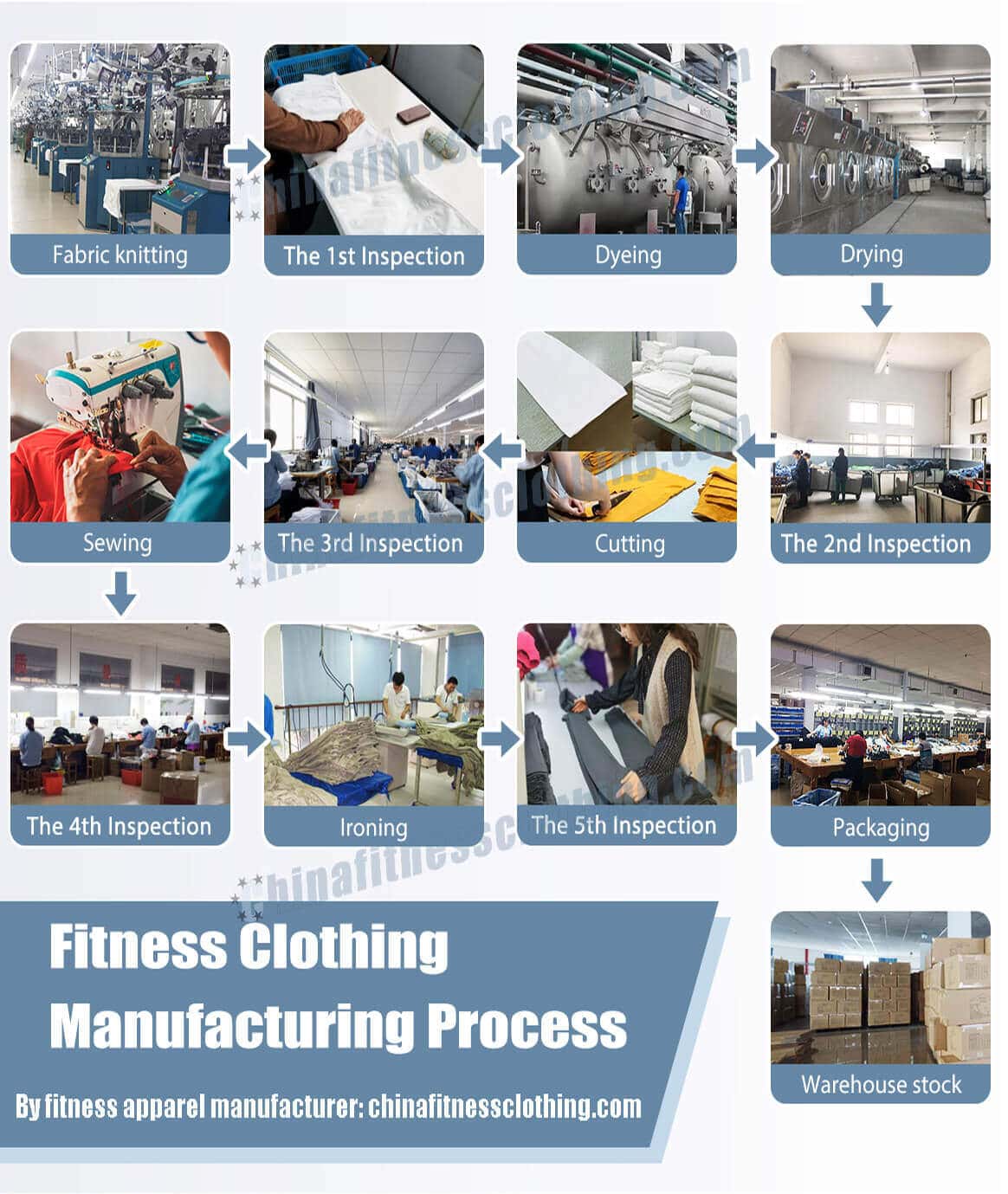
After completing the production preparation stage, we enter the production process stage, a series of refined operations ensuring the final quality and functionality of the sportswear and athletic garments designed for physical activity. These steps are crucial for achieving the durability, performance, and comfort required for active lifestyles.
-
Cutting
Using precise cutting tools, we cut the samples from the patterns. Our cutting team carefully checks each sample to ensure every piece of fabric is cut according to design specifications, avoiding any errors.
(High-precision automatic fabric cutting machine in operation at MAISHI sportswear factory ensuring exact pattern sizing.)
Measurement and Marking: Before cutting, ensure each piece of fabric is carefully measured and marked to avoid any human error.
Cutting Methods: Employ different cutting techniques, such as laser cutting or rotary cutting, to handle various types of fabrics. For example, rotary cutting may be used for heavy or multi-layered materials to ensure clean, crisp edges.
Edge Finishing: The edges of the cut fabric are treated to prevent fraying and damage, ensuring the durability and aesthetic appeal of the finished product.
The efficient cutting methods used in this stage not only reduce fabric waste but also contribute to increased production efficiency.
-
Sewing
After cutting, the fabric is handed over to experienced and skilled seamstresses. Our factory uses advanced sewing machines and innovative sewing equipment, enabling precision and high-quality sewing techniques such as flatlock stitching and reinforced seams. The sewing process is a critical stage where fabric panels are stitched together, directly impacting the quality, comfort, and ergonomic design of the final athletic garments. Skilled seamstresses play a vital role in ensuring the durability and performance of garments intended for physical activity.
Sewing Techniques: We employ a variety of sewing techniques, such as flatlock seams, buttonhole stitches, and twin needle stitching, to guarantee the strength and durability of our sewn components. In high-performance sportswear, strength and elasticity are critical considerations.
Attention to Detail: We place a strong emphasis on the meticulous handling of every detail, including trimming loose threads, ensuring smooth seams, and maintaining consistent stitch uniformity. These details directly impact the final product’s appearance and lifespan.
Fit Testing and Feedback: During production, we conduct regular fit tests to ensure the garments fit properly and meet design specifications. Fit testing feedback is a crucial part of achieving effective improvements.
Prototyping is a necessary step before mass production, allowing us to evaluate the practicality and quality of your activewear design. Requesting samples before large-scale production ensures the garments meet expectations for quality, fit, and functionality. Only after successful prototyping and sample approval do we proceed to mass production, maintaining rigorous quality control to ensure every product meets the brand’s standards.
This phase of meticulous refinement ensures that each piece of sportswear is both comfortable and perfectly fitted.
-
Printing
Once sewing is complete, we proceed with the printing of logos or patterns. This is a critical step in adding brand identification and decorative elements. Printing methods include heat transfer, screen printing, direct-to-garment, and embroidery, among others. Clients can choose their preferred printing method, and we provide suitable printing recommendations based on the design content and the fabric of the activewear. We also conduct a final artistic review to ensure the accuracy and aesthetic appeal of the patterns.
Ensuring Quality in the Sportswear Manufacturing Process: Quality Control and Finishing Stage
After production, we enter the quality control and finishing stage. Here, we conduct stringent quality checks on every piece of sportswear, including:
Quality Inspection: Our quality inspection team carefully examines each product to ensure they fully comply with design and functional requirements, including dimensions, sewing quality, and printing effectiveness. A strong focus on quality at this stage ensures that your sportswear meets your brand’s standards and satisfies your customers.
Ironing and Final Finishing: Each garment is ironed to remove creases, ensuring a neat final appearance. Our finishing team repackages the products to ensure they present in the best condition to customers.
Balancing Cost and Quality
Achieving the right balance between cost and quality is a key challenge when launching an activewear line. While it’s important to keep production costs manageable, compromising on quality can undermine your brand’s reputation and customer trust. To strike this balance, consider partnering with a manufacturing partner who understands your quality standards and can offer high-quality materials and construction at a fair price.
Producing small batches or using print-on-demand services can help you manage inventory and reduce upfront costs, especially when testing new designs. Implementing a robust quality control process is also essential—regular inspections and testing ensure that every piece of activewear meets your brand’s standards before reaching customers. By focusing on both cost efficiency and uncompromising quality, you’ll create activewear that is both accessible and reliable, building a loyal customer base for your brand.
Finalizing the Sportswear Manufacturing Process: Delivery and Market Feedback
After completing all production steps, we finalize the packaging and shipping of the activewear. The feedback we receive from clients is often rewarding. For instance, one client praised: “Thank you very much for your team’s professionalism and efficiency. The quality of the activewear exceeded my expectations, and the communication during the sample process was very smooth. We are extremely satisfied with the partnership!”


This positive feedback not only earns our brand a good reputation but also motivates us to continue improving and innovating in our future production. We are committed to providing the highest quality sportswear and striving to maintain our leading position in the market.
Marketing and Sales Strategy
A well-crafted marketing and sales strategy is vital for the success of your activewear line in the dynamic activewear market. Start by clearly identifying your target audience and developing a unique value proposition that highlights what makes your brand and products special. Collaborating with fitness influencers or sponsoring fitness events can significantly boost your brand’s visibility and credibility among fitness enthusiasts.
Leverage social media platforms like Instagram and Facebook to showcase your activewear, share customer stories, and engage directly with your audience. Consider implementing email marketing campaigns and loyalty programs to encourage repeat purchases and foster long-term relationships with your customers. By combining these strategies, you’ll not only drive sales but also establish your brand as a trusted name in the activewear market, setting the stage for long term success.
FAQ
A1: What are the main steps in the sportswear manufacturing process?
Q1:
- Design: Create designs based on market needs.
- Material Selection: Choose suitable fabrics.
- Cutting: Cut the fabric into required shapes.
- Sewing: Sew the parts together.
- Printing: Add patterns or branding.
- Quality Control: Inspect the final product quality.
A2: How to choose the fabric for sportswear?
Q2:
- Breathability: Fabric should be breathable.
- Stretchability: Choose stretchy materials.
- Durability: Fabric should be durable.
A3: What are common challenges in sportswear manufacturing?
Q3: Material Shortages; Design Changes; Production Time Management.
A4: How to ensure the quality of sportswear?
Q4:
- Conduct Quality Inspections.
- Create Samples for Testing.
- Gather Customer Feedback.
A5: How to reduce manufacturing costs for sportswear?
Q5:
- Buy materials in bulk.
- Optimize the production process.
|
Step |
Description |
| Design | Creating the initial sportswear concept |
| Material Choice | Selecting the right performance fabrics |
| Cutting | Cutting fabrics according to the pattern |
| Sewing | Assembling the garments |
| Quality Control | Inspecting the finished products |
By comprehensively analyzing the sportswear manufacturing process, we hope to offer valuable references and support to entrepreneurs and designers. From the initial design concept to the final product, each step is crucial to achieving success. Throughout this process, our company, MAISHI, is dedicated to closely collaborating with clients to ensure that every idea is reflected in the final product. We focus not only on product quality and performance but also on effective communication and feedback with our clients. This collaborative spirit has earned us a strong reputation in the industry.
Whether you’re seeking innovative designs or hoping to reshape your brand image, choosing MAISHI as your sportswear manufacturing partner will be a wise decision to realize your vision. We look forward to collaborating with you to create impactful activewear that helps your brand stand out in the market.
Thank you for reading. If you have any questions about the sportswear manufacturing process or want to know more about MAISHI, please feel free to contact us; we are happy to assist you.