

A sweatshirt is made from knit fabric, usually cotton, a cotton-polyester blend, or polyester. It is built as french terry (looped back) or brushed fleece (raised back). Fiber content sets softness, breathability, and shrinkage behavior. Fabric weight, measured in gsm, sets warmth and drape. Cotton gives a soft, natural texture. Polyester adds durability and helps control pilling. Blends balance the two.
For apparel brands, fiber content is only the starting point. Working with sweatshirt manufacturers means turning a design into an executable specification: fiber ratio, gsm, knit structure, finishing, and quality-control criteria. This guide covers the six most common sweatshirt fabrics, with the specification logic behind each one.
What Is a Sweatshirt Made Of? 6 Common Types of Sweatshirt Fabrics
Sweatshirt and hoodies sell mainly in autumn and winter. Buyers choose them for warmth retention and easy wear. The right fabric depends on your price band, season, and decoration method (screen printing or embroidery). No single fabric is best for every line.
1. All Cotton Sweatshirt Fabric
This fabric is 100% cotton. A typical reference spec is around 320 gsm at 180 cm width. The knit fabric is thick, very soft, and slightly elastic. That makes it suitable for sweatshirts, pants, and sportswear. It is soft to the touch, and its clean, simple surface suits minimalist designs.
Be careful with the assumption that “100% cotton means best quality.” Cotton is more prone to shrinkage than blended yarns. Whether a cotton sweatshirt holds its size depends on pre-shrinking and on how well shrinkage is controlled in the finished garment, not on the fiber label.
Manufacturer’s Spec Note: We can supply fabrics that meet OEKO-TEX® Standard 100. We also offer GOTS-certified organic cotton. The maximum weight for our organic cotton is strictly capped at 280 gsm. If your line needs a heavyweight fabric above that, organic cotton is not the right option, and a conventional cotton or blended construction is more suitable.
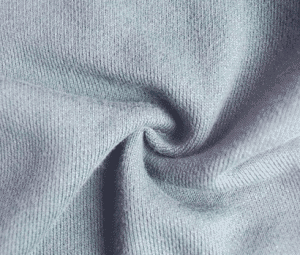
2. Stretch Sweatshirt Fabric
Stretch sweatshirt fabric is heavier than standard constructions and has very good thermal insulation. This fabric is made of 77% Cotton + 23% spandex, with a high gram weight of 480g / ㎡. It has a looped back, which suits sweatshirts, pants, and pullovers. Its high fabric weight gives a fuller structure and more warmth. That makes it a common choice for cold-season lines.
Heavy stretch fabric is harder to sew. Thick layers combined with elasticity can cause skipped stitches, seam puckering, and seam failure under tension.
Manufacturer’s Spec Note: For hooded sweatshirt manufacturers, stitching capability matters as much as fabric choice. Our own factory uses Juki and Pegasus equipment for four-needle six-thread flatlock stitching. Flatlock gives a flat, durable seam that copes well with stretch and reduces the risk of seam breakage. Heavy hood, side, and shoulder seams are where this matters most.
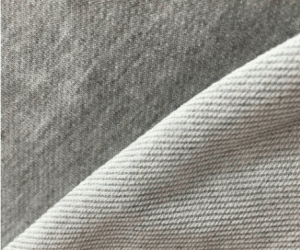
3. CVC Sweatshirt Fabric
CVC (Chief Value Cotton) is a cotton-polyester blend. The reference construction is 65% cotton and 35% polyester. The fabric is thick and soft without feeling stiff. It is comfortable for long wear, warm, and easy to care for. The polyester content improves durability and reduces shrinkage compared with 100% cotton. Cotton still provides most of the hand feel.
Manufacturer’s Spec Note: A blend like this holds its shape well, which makes it a strong fit for sweatshirts with large-area prints. Stable dimensions help keep graphics from distorting after washing.
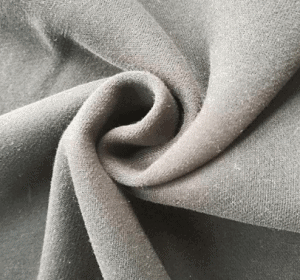
4. Terry Cloth (French Terry)
The original article calls terry cloth a “woven” fabric. In sweatshirt production, terry is a knit fabric with loops on the reverse side, commonly called french terry. Its structure is thick, stable, and elastic. It absorbs moisture and retains warmth. It is widely used in sportswear, polo shirts, pajamas, and children’s clothing. It is also a common hoodie fabric for lighter, more breathable constructions.
Manufacturer’s Spec Note: The looped interior gives french terry good breathability at mid weights. It suits activewear and athleisure, where the garment must manage warmth and moisture without the bulk of brushed fleece. In summer or high-activity scenarios, low-to-mid gsm terry is usually the better choice.
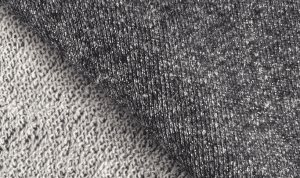
5. Berber Fleece
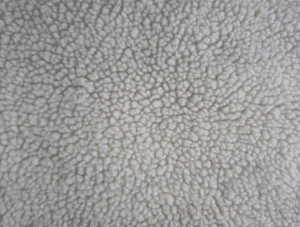
Berber Fleece itself is not a standard term. It is a common name used by businesses and does not belong to cashmere products. The chemical composition of cashmere is 70% polyester and 30% nitrile. Berber Fleece is not easy to generate static electricity and has the smell of roasted chicken feather after being ignited. It’s comfortable and warm.
Manufacturer’s Spec Note: With a fabric like this, the main risks in bulk are shedding and batch-to-batch color variation. Source-level control of colorfastness and surface finishing is essential. Require colorfastness testing and surface checks on the bulk fabric before cutting. Check the fabric before cutting, not after the garments are sewn.
6. Scratch Fleece (Brushed Fleece)
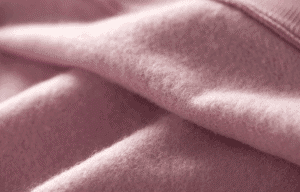
Scratch Fleece is a kind of fabric. It’s all fluffy and seems to have been scratched. It is characterized by warmth, windproof, light weight, easy compression, easy care, antistatic performance. After raising, the knitted fabric will be soft and full, and the warmth retention of the fabric will be enhanced due to the formation of pile. After finishing, wool fabric can also achieve the effect of raising.
Manufacturer’s Spec Note: Raising (brushing) lifts fibers from the knit surface. This traps air and increases insulation. Combined with a heavier fabric weight, it makes brushed fleece an ideal material for winter streetwear collections. It is less suitable for warm-weather or high-output sportswear, where breathability matters more.
What Defines High Quality Sweatshirts Manufacturers?
“High-quality” is not a claim a supplier can prove with adjectives. Buyers can verify it through process. What matters is a documented inspection system and stated acceptance criteria.
At our 12,000㎡ facility, every order goes through a five-stage, 100% inspection process. Final acceptance follows AQL 2.5. Consistency comes from checking every piece, not from sampling alone. When you evaluate high quality sweatshirts manufacturers, ask which stages are inspected, whether inspection covers 100% of pieces or only a sample, and which AQL level applies.
Fabric behavior must be controlled before bulk production, not corrected after it:
- Shrinkage: Confirm shrinkage results on the fabric before cutting. Cotton-rich fleece and terry are the most exposed. Specify pre-shrinking in your tech pack.
- Colorfastness: Test for dye transfer and fading on dark and saturated colors. Test before bulk production.
- Pilling: Pilling depends on fiber, yarn, and finish. Blends and brushed surfaces vary widely. Define your expectation in the specification.
- Seam construction: Check that stitch type suits the fabric weight. Our cut-and-sew lines use Juki and Pegasus flatlock (four-needle six-thread) and coverstitch (three-needle five-thread) equipment.
A higher gsm does not automatically mean higher quality. Heavier is warmer, but it can hurt breathability and comfort in warm seasons or sports use. Choose weight by use case.
How to Choose Reliable Custom Sweatshirt Manufacturers
Choosing custom sweatshirt manufacturers is a supply-chain decision. Use these criteria to judge whether a supplier is a genuine source factory:
- Owned production capacity. Our own factory covers 12,000㎡, with 180+ skilled workers and an annual capacity of 2.5 million pieces.
- Textile depth. Our textile roots date back to 1999, and the factory was formally established in 2014. That history helps with fabric sourcing and fabric-related problem-solving.
- Verifiable certifications. We hold Amfori BSCI, GRS, and OEKO-TEX® Standard 100. We supply GRS-certified recycled polyester and RPET+Spandex, GOTS-certified organic cotton (capped at 280 gsm), and bamboo fiber options.
- Documented QC. Ask for the inspection stages and AQL standard in writing. Ours are five-stage 100% inspection and AQL 2.5.
- Clear commercial terms. Ask for MOQ, sampling time, and lead time up front.
Our terms for custom cut & sew orders:
| Item | Terms |
|---|---|
| MOQ | 100–200 pieces per color |
| Sampling | 8–15 days |
| Bulk production | 25–35 days |
(We also offer seamless knitting on Santoni SM8-TOP2V machines, at 450–500 pieces per style. This guide focuses on cut & sew sweatshirts.)
If you need stock now: As a sweatshirt wholesale supplier, we hold 100,000+ pieces of finished goods and greige fabric in stock. Stock orders start at 1 piece, and stock samples can ship in 2–3 days. This suits testing a market, replenishing, or meeting an urgent deadline before committing to a custom run.
FAQs for Sweatshirt Sourcing
What is the best fabric for a custom sweatshirt?
There is no single best fabric. It depends on your product line. A cotton-polyester blend balances durability and cost. 100% cotton gives the softest hand feel. Choose by season, price band, and decoration method.
How to prevent pilling and shrinkage in bulk orders?
Specify pre-shrinking in your tech pack, and state your pilling and shrinkage expectations in writing. Then work with a factory that enforces a strict AQL 2.5 standard to control final quality. Confirm fabric behavior before bulk production.
Does higher GSM mean a better sweatshirt?
No. Higher gsm only means a heavier fabric. A 280 gsm fabric suits spring layering and our organic cotton range. A 480 gsm stretch sweatshirt fabric suits heavy winter hoodies. Match weight to the use, not to the number.
Request Your Fabric Swatch Book or Custom Quote
Ready to start? Request our fabric swatch book, or send your tech pack for a custom quote. Because we run our own factory, stock samples can ship within 2–3 days. Custom sampling takes 8–15 days.
