
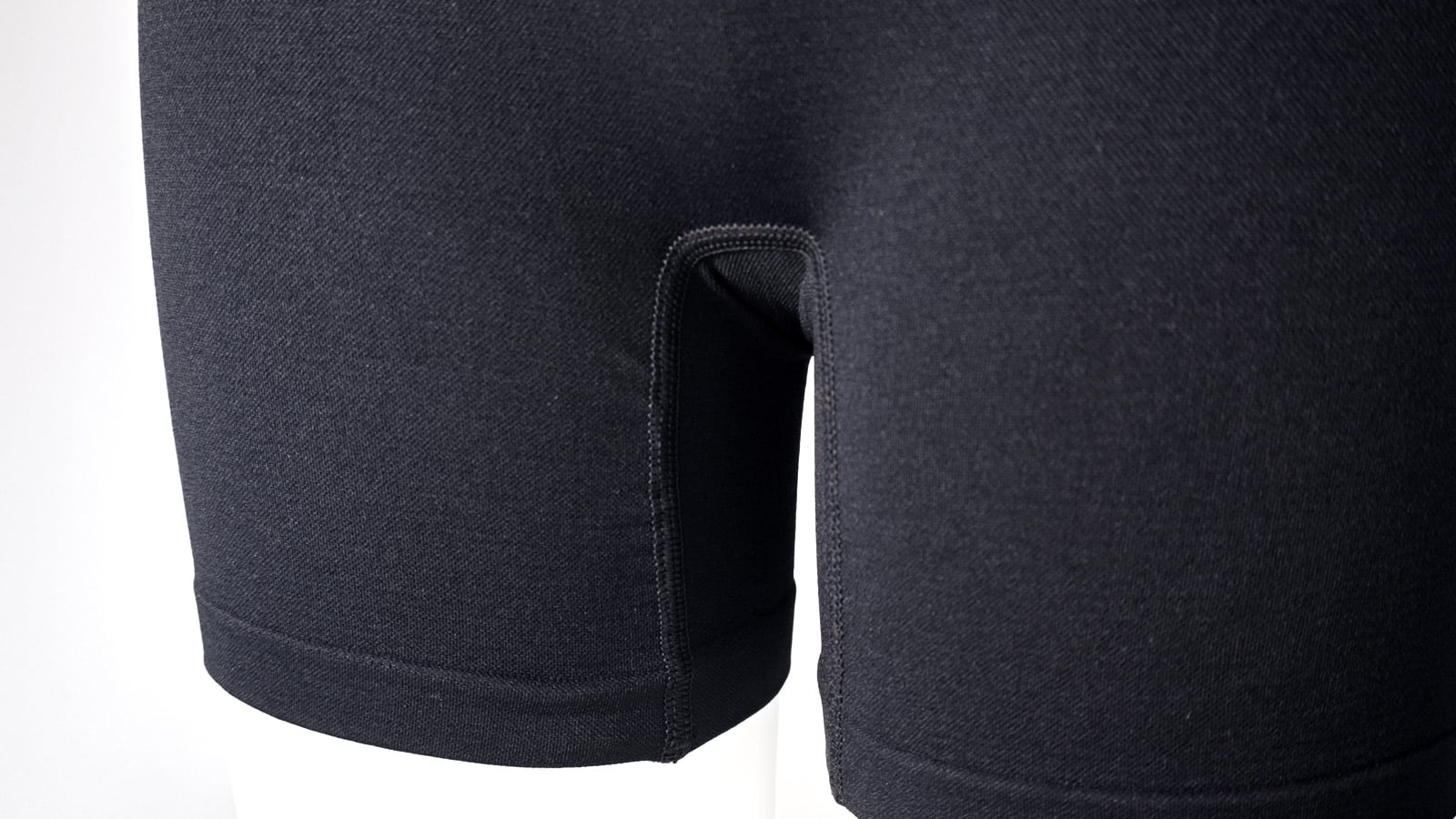
For fitness beginners, search queries like “do you wear underwear under compression shorts” or “is wearing undies under skins okay” represent a common daily wardrobe dilemma. Consumers often struggle with the balance between modesty, chafing, and moisture management when wearing skin-tight activewear bottoms.
For activewear brands and apparel manufacturers, however, this consumer dilemma translates directly into a product engineering challenge. Whether a compression garment can be comfortably worn without underwear—without risking transparency (squat-proof failure) or severe chafing—depends entirely on fabric GSM, crotch gusset design, and stitching technology.
Before diving into the manufacturing solutions that solve these issues, let’s look at the standard consumer perspective regarding this common question.
The Consumer Perspective: Do I wear compression shorts as underwear or outerwear?
This is not at all an uncommon problem for fitness beginners. Some people may feel uncomfortable wearing nothing under their compression shorts. But because the compression shorts feel so fitted and natural, they fall into the strange association of outerwear and underwear at the same time. So the question” should I wear underwear under compression shorts” has confused many people.
Maybe we can reframe the question: Do I wear these compression shorts as underwear or as outerwear? Or you could say that:
Should I wear underwear under compression shorts for modesty reasons? Should I wear underwear under compression shorts for athletic reasons?
Here’s the thing. For the first question, since compressed shorts don’t have pockets, if you need to carry small items when you exercise, you can use compressed shorts as underwear, and you can always wear shorts on top of compression shorts.
For the second question, considering the two properties of compression shorts, underwear should not be worn under compression shorts. Since compression suits are designed to be worn close to the skin (i.e. as a base layer), wearing an item of clothing under compression suits may hinder the benefits of wearing them.
One, they help hold muscles in place by compressing them; Two, they help keep your muscles light and dry during your solid workouts by wicking sweat away from your skin. By preventing moisture and sweat from your skin, compression shorts cool your body during strenuous exercise, thereby regulating your body temperature.
The benefits of compression shorts.
- Full oxygen supply
- Muscles supporting
- Body recovery
- Provide breathability
- Improve flexibility
- Cold-proof
- Wicking
- Provide comfort
- Keep the optimum temperature
- Release fatigue
- Better exercise effect
- Reduce injury
What will happen if you wear underwear under compression shorts? When your workout gets intense and you sweat a lot, the underwear absorbs all the sweat and moisture from your skin. This will cause your compression shorts to become damp, which will affect their breathability. Your compression shorts don’t control your temperature, either. This will only lead to more sweating, which will eventually make you burn out faster.
If you feel more comfortable wearing underwear under tight shorts, that’s fine. But one thing to watch out for is the seams of your underwear. The pressure created by compression shorts can cause friction and general discomfort. Therefore, you may want to consider the seamless lingerie option, which has become a popular option. Many brands, including sportswear, offer seamless lingerie options as well as wholesale seamless leggings manufacturers.
How Activewear Brands Can Design Compression Shorts to Eliminate the “Underwear” Dilemma
When a consumer experiences discomfort without underwear, it is typically a failure in garment engineering. Premium activewear manufacturers resolve these issues through strict material selection and structural design.
Fabric GSM & Squat-Proof Testing
Transparency during deep squats is a primary reason consumers hesitate to go “commando.” To achieve a 100% squat-proof rating without compromising compression, the textile density must be meticulously calibrated.
- Optimal Specifications: For high-performance compression shorts, B2B procurement should target a fabric weight of 250 to 300 GSM.
- Composition Ratio: A blend of 80% Nylon and 20% Spandex is recommended. Nylon provides superior durability and a smoother hand-feel compared to polyester, while 20% Spandex delivers the necessary 4-way stretch to maintain the garment’s structural integrity under tension, eliminating the risk of sheer spots.
Crotch Gusset Engineering: Diamond vs. Triangle
Standard apparel manufacturing utilizes a traditional cross-seam at the crotch, combining four fabric panels at a single focal point. This creates a dense, rigid intersection that causes severe chafing and the dreaded “camel toe” effect when worn directly against the skin.
- The Solution: Professional cut-and-sew operations eliminate this stress point by integrating an independent fabric panel known as a gusset.
- Application: Utilizing a diamond or triangle gusset disperses the tension across multiple, flatter seams. This structural modification anatomically accommodates the wearer, providing unrestricted mobility, enhanced ventilation, and a comfortable experience that renders additional underwear unnecessary.
Stitching Technology to Prevent Chafing
The type of thread lock used dictates the internal topography of the garment. Traditional overlock stitching leaves a raised fabric ridge on the interior, acting as an abrasive surface during repetitive motion.
- Cut & Sew Standard: High-end compression shorts must utilize 4-needle 6-thread Flatlock stitching. This technique butts the fabric edges together rather than overlapping them, creating an ultra-flat seam profile with minimal protrusion, drastically reducing friction against bare skin.
- Alternative Engineering: While flatlock stitching minimizes chafing in cut-and-sew garments, brands looking for an absolute zero-friction experience often opt for seamless knitting technology. You can explore advanced seamless clothing manufacturing techniques to understand how circular knitting entirely eliminates side seams.
Upgrade Your Compression Wear Line Today
Are your compression shorts receiving customer complaints about chafing, transparency, or uncomfortable seams? Product excellence starts at the factory floor.
Our engineering team specializes in resolving these structural flaws through precise GSM combinations, custom gusset integrations, and flawless flatlock execution.
[Request a Squat-Proof Sample Pack Today] and see the engineering difference firsthand. Reach out to discuss your tech pack specifications.
