
What Is Antibacterial Textiles?
The antibacterial properties of textiles are the resistance of textiles to bacteria. A special textile that fixes the antibacterial finishing agent on the surface of the fabric through a special way to achieve anti-bacterial and wash-resistant effects. It has a broad spectrum, durability, safety and reliability. They can be used to make undergarments by many underwear manufacturers.
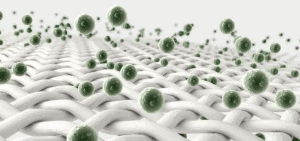
Principles of Antibacterial Textiles
The antibacterial principles of antibacterial textiles vary greatly according to the types of antibacterial agents used, but in general, they are mainly based on the following:
- ◆Chemically react with the protein in the bacterial cell to destroy its function;
- ◆Inactivate various metabolisms in cells;
- ◆ Break the bacterial cell wall through charge adsorption;
- ◆Destroy the energy release system in the cell;
- ◆Speed up the phosphoric acid redox system to disrupt the normal cell growth system;

- ◆Hinder the electron transfer system and generate amino acid transesterification;
- ◆Inhibit spore formation, block DNA synthesis, and inhibit its growth.
Antibacterial test method The testing of antibacterial properties of textiles is divided into two methods: qualitative testing and quantitative testing, of which quantitative testing is the main method. volume_up content_copy share
- ◆Qualitative experiment
The qualitative method of bacteria can roughly determine the nature of the antibacterial components in the textile, that is, distinguish whether the antibacterial agent is dissolved, and choose an appropriate quantitative method according to its characteristics.
- ◆Quantitative experiment
By adding a certain concentration of designated bacteria to the sample cloth, the two are cultivated together at 37 degrees Celsius for a period of time, and the bacteria on the cloth are recovered to observe the killing effect of the sample on the bacteria. Normally, the plate counting method is used for colony counting. The antibacterial quantitative methods currently used are mainly absorption method, vibration method and film method.
